
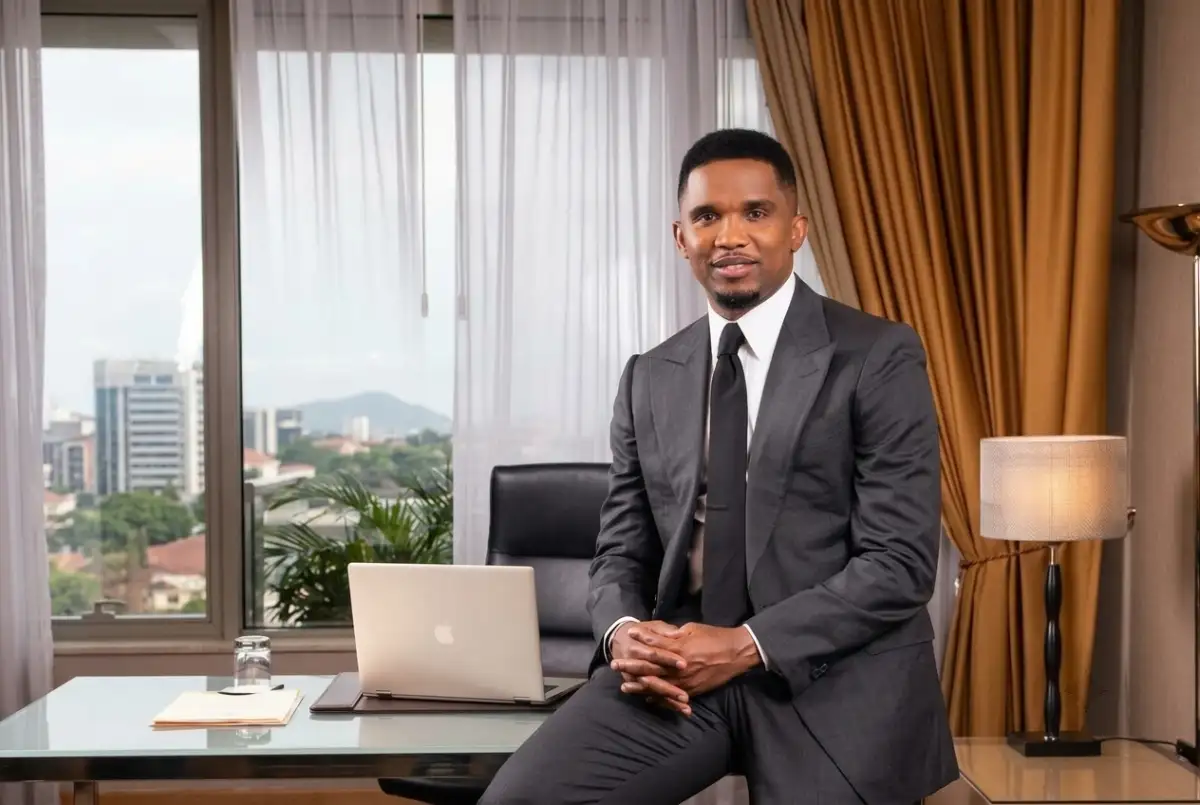
Barely two years after hanging up his boots, Samuel Eto’o opened a new chapter of his life in December 2021, at the head of the Cameroonian Football Federation (FECAFOOT). Since then, his tenure has become one of the most talked-about and most turbulent in the recent history of Cameroonian football, amid major international events, repeated governance crises and disciplinary sanctions.
A disputed election, validated by sports justice
Having declared his candidacy in early September 2021, Eto’o first saw it threatened by a federation electoral commission that was considering barring dual nationals from running, a rule that would have directly affected him, since he had held Spanish nationality since 2007.
The candidacy was finally validated and, on 11 December 2021, Eto’o won the election against outgoing president Seidou Mbombo Njoya, by 43 votes to 31. His victory, celebrated with popular jubilation in the streets of Yaoundé, did not immediately put an end to the challenges: only after several months of litigation did the Court of Arbitration for Sport (CAS) definitively validate his election.
The Africa Cup of Nations at home, then the turbulence of the 2022 World Cup
His presidency began directly under high tension, with the organization of the 2022 Africa Cup of Nations in Cameroon and then the qualification of the Indomitable Lions for the World Cup in Qatar, narrowly secured in a dramatic finish against Algeria in March 2022 (a win on away goals after a decisive goal from Karl Toko Ekambi in stoppage time of extra time). After staying in Qatar as an ambassador of the tournament following Cameroon’s group-stage elimination, Eto’o found himself at the center of a controversy on 5 December 2022: a violent altercation with an Algerian YouTuber near Stadium 974, filmed and widely shared, in which he swung a blow in that man’s direction as he confronted him about the refereeing of the qualifying match against Algeria. Eto’o quickly offered a public apology, while denouncing repeated harassment since that match.
Rigobert Song, then Marc Brys: technical management under strain
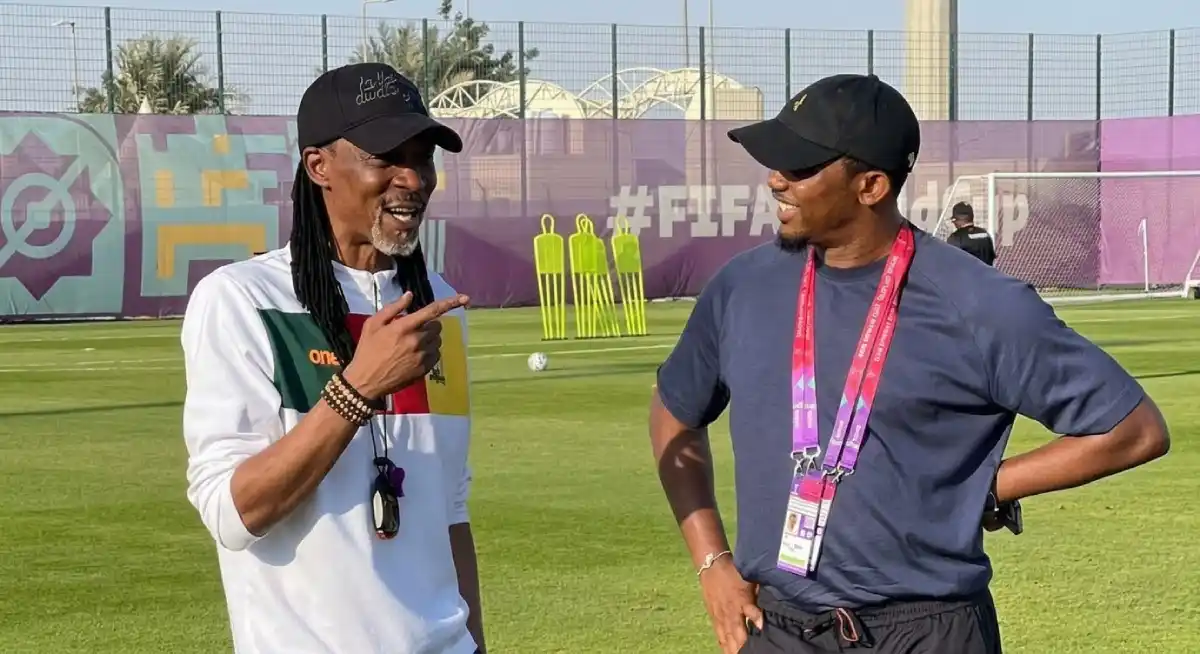
On the sporting front, the 2023 Africa Cup of Nations, played in Ivory Coast in January and February 2024, marked the end of Rigobert Song’s tenure. The Indomitable Lions, who qualified for the round of 16 after a complicated group stage, were eliminated by Nigeria (2-0). A few weeks later, FECAFOOT announced that the coach’s contract, which expired on 28 February, would not be renewed. In two years, Song managed 23 matches, with only six wins, eight draws and nine defeats.
Song’s succession soon opened a new front between the Cameroonian sports authorities and FECAFOOT. On 2 April 2024, the Ministry of Sports announced the appointment of Belgian Marc Brys at the head of the Indomitable Lions, with his own staff. This decision, taken without prior agreement with the Federation, set off a tug of war over the management of the national team and over the division of powers between the ministry and FECAFOOT.
The situation worsened in May. FECAFOOT ended up keeping Marc Brys as head coach, but made a deep overhaul of his coaching staff. Several staff members initially chosen by the ministry were sidelined, while the Federation imposed in particular Martin Ndtoungou Mpile as assistant and David Pagou as second assistant. Brys’s appointment itself was also challenged before the Conciliation and Arbitration Chamber of the Cameroon National Olympic and Sports Committee, which provisionally suspended the appointments before the situation continued to evolve.
Tensions reached their peak on 28 May 2024, when Marc Brys showed up at FECAFOOT’s headquarters with members of the staff appointed by the ministry. A meeting with Samuel Eto’o quickly broke down in a particularly tense atmosphere, with each camp effectively disputing the other’s authority over the running of the national team. FECAFOOT then decided to sideline Brys, before the Cameroonian authorities finally reinstated the Belgian coach at the head of the Lions.
Despite this institutional conflict, Marc Brys’s sporting record gradually improved. Cameroon qualified in particular for the 2025 Africa Cup of Nations without suffering a single defeat in its group, finishing top with 14 points. The CAF then highlighted the work of the Belgian coach, who had arrived at a national team in the middle of a transition.
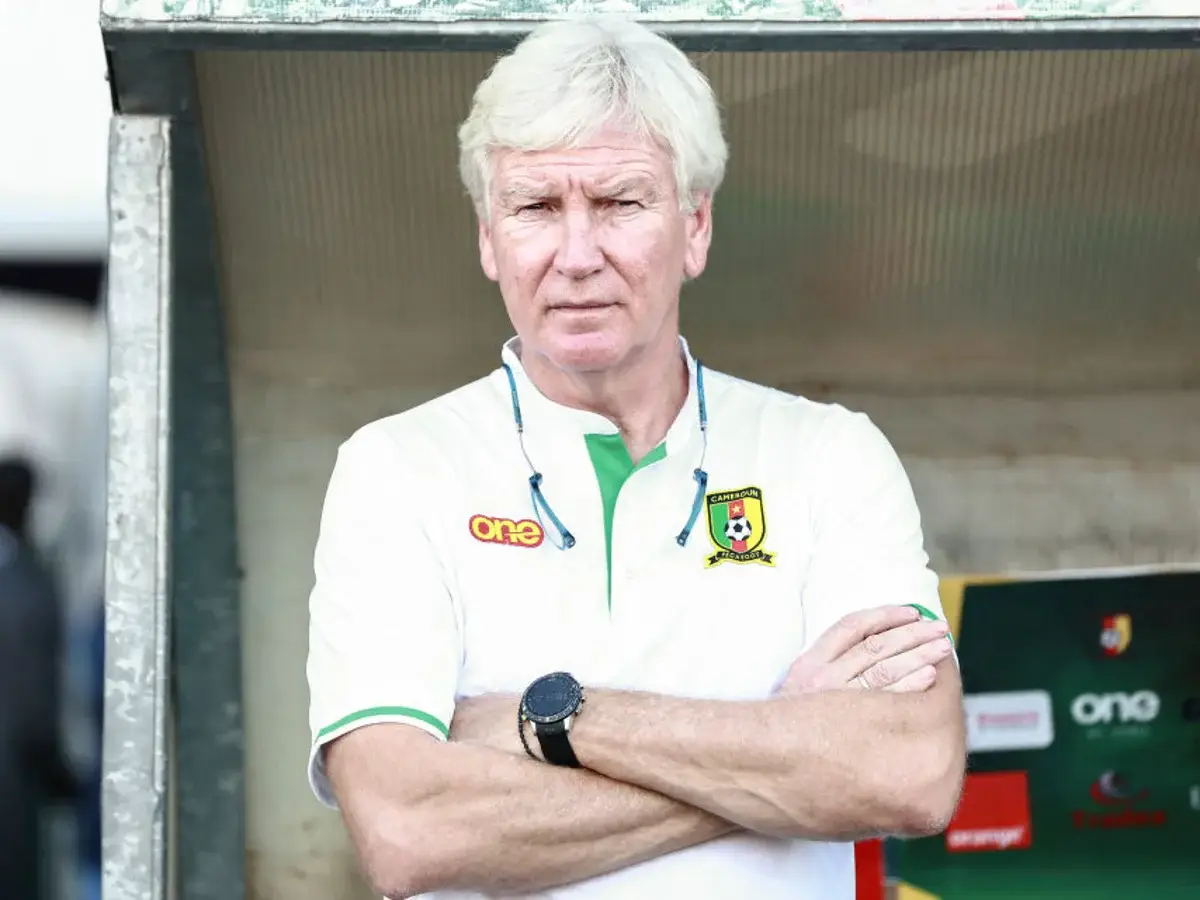
The tug of war, even so, never completely disappeared. After the 2026 World Cup qualifying campaign and Cameroon’s failure to qualify directly for the World Cup, the situation deteriorated again ahead of the 2025 Africa Cup of Nations. Just forty-eight hours after Samuel Eto’o’s re-election as president of FECAFOOT, the Federation announced Marc Brys’s departure, whose contract, officially running until 30 September 2026, was thus cut short. This decision came with a fresh break with several key players of the national team: André Onana and Vincent Aboubakar were not on the list selected for the 2025 Africa Cup of Nations. FECAFOOT then put the Lions in the hands of David Pagou, supported by Alexandre Belinga and Martin Ndtoungou Mpile. Brys openly challenged this decision by publishing, in turn, a list of 28 players that included, among others, Onana and Aboubakar. The Belgian coach eventually announced his departure on 30 December 2025, officially ending a collaboration marked for almost two years by strong institutional tensions.
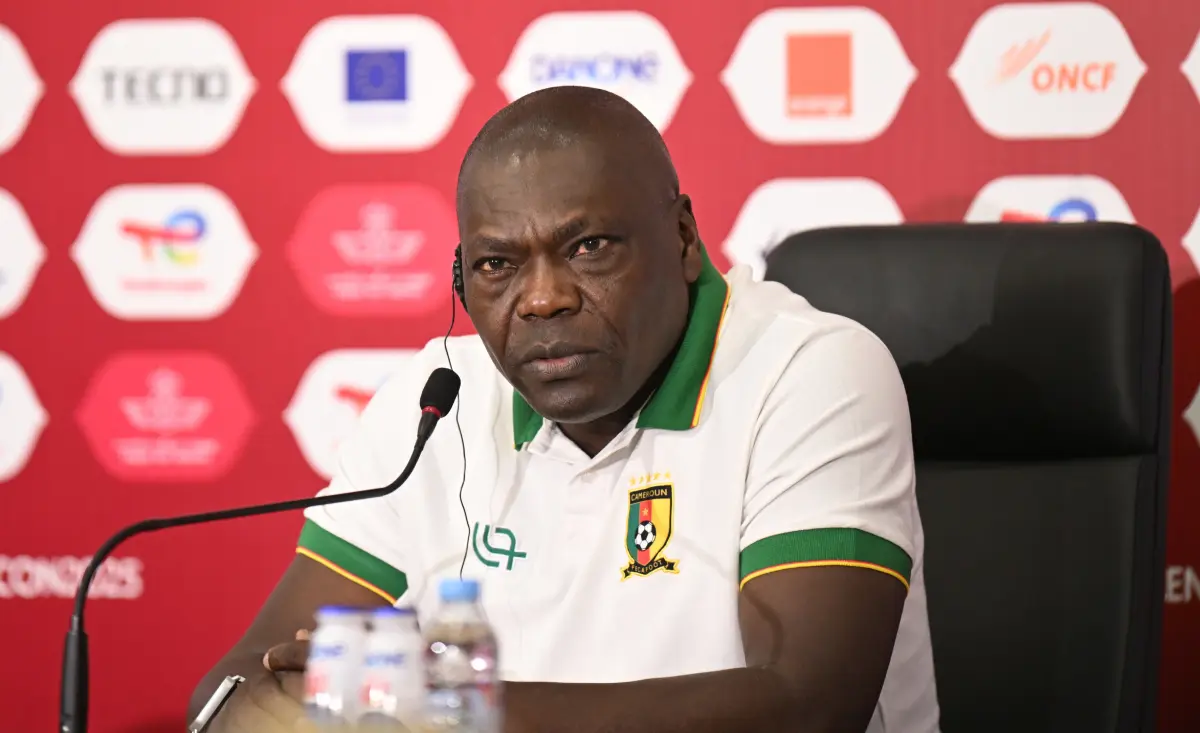
This appointment was a new stage in the reorganization of the Indomitable Lions. David Pagou, who had previously managed, among others, PWD Bamenda, Stade Renard and Coton Sport, was then put for the first time at the head of a national team, having served as assistant number 2 on Marc Brys’s staff. FECAFOOT thus relied on a coach who knew Cameroonian football well, but who had very little time to prepare for the 2025 Africa Cup of Nations, as he took charge of the team only a few weeks before the start of the competition.
A FIFA suspension
On 30 September 2024, FIFA’s Disciplinary Committee sanctioned Samuel Eto’o with a six-month ban from attending matches of Cameroon’s representative teams, following events that occurred during the round of 16 of the FIFA U-20 Women’s World Cup between Brazil and Cameroon, played on 11 September 2024 in Bogotá, Colombia.
FIFA accused the FECAFOOT president of breaching Articles 13, on offensive behavior and the principles of fair play, and 14 of its Disciplinary Code, on misconduct by players and officials. The sanction, which took effect that same day, 30 September, banned him from attending the matches of the Cameroonian national teams, both men’s and women’s, and in all age categories.
A contested re-election in November 2025
After four years at the head of FECAFOOT, Samuel Eto’o ran for his own succession at the elective General Assembly on 29 November 2025. The vote took place in a context once again tense with the Cameroonian authorities: Sports Minister Narcisse Mouelle Kombi had asked a few days earlier to postpone the election, citing disagreements over the electoral process and suspensions he considered irregular. Despite this challenge, the elective General Assembly was held at the CAF Centre of Excellence in Mbankomo, near Yaoundé, and Eto’o, the sole candidate for the presidency, was re-elected by a wide margin for a new four-year term with 85 votes out of 87 cast.
The 2025 Africa Cup of Nations: a young generation that reassures
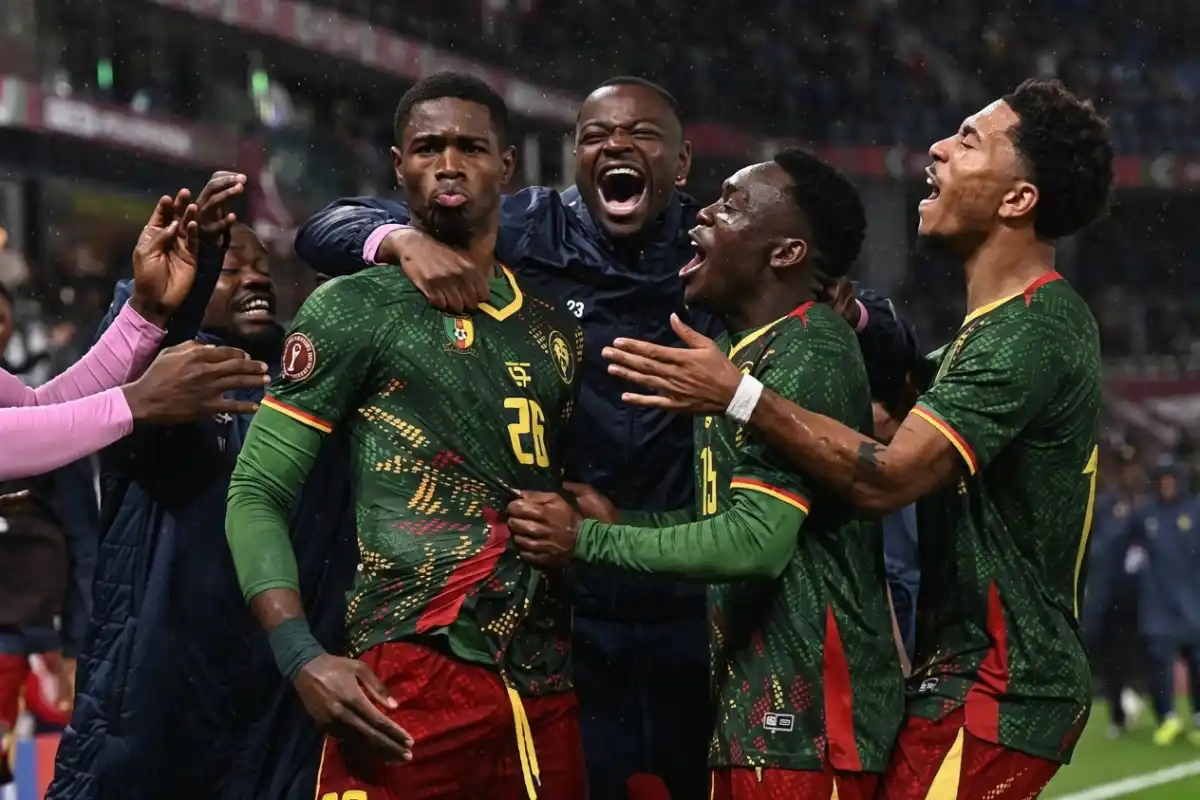
Under David Pagou, the Indomitable Lions entered the 2025 Africa Cup of Nations in Morocco in a tough Group F, alongside reigning champions Ivory Coast, Gabon and Mozambique. The team surprised by qualifying for the round of 16, where it eliminated South Africa (2-1), before falling in the quarter-finals to host nation Morocco (0-2), who were unstoppable that night. Despite the elimination, the overall performance of this young team was praised, and Eto’o himself said immediately afterwards: “Next Africa Cup of Nations, we’re coming to win it.” Attention now turns to the 2027 Africa Cup of Nations qualifiers, in which Cameroon plays in Group G.
A growing influence on the continental stage
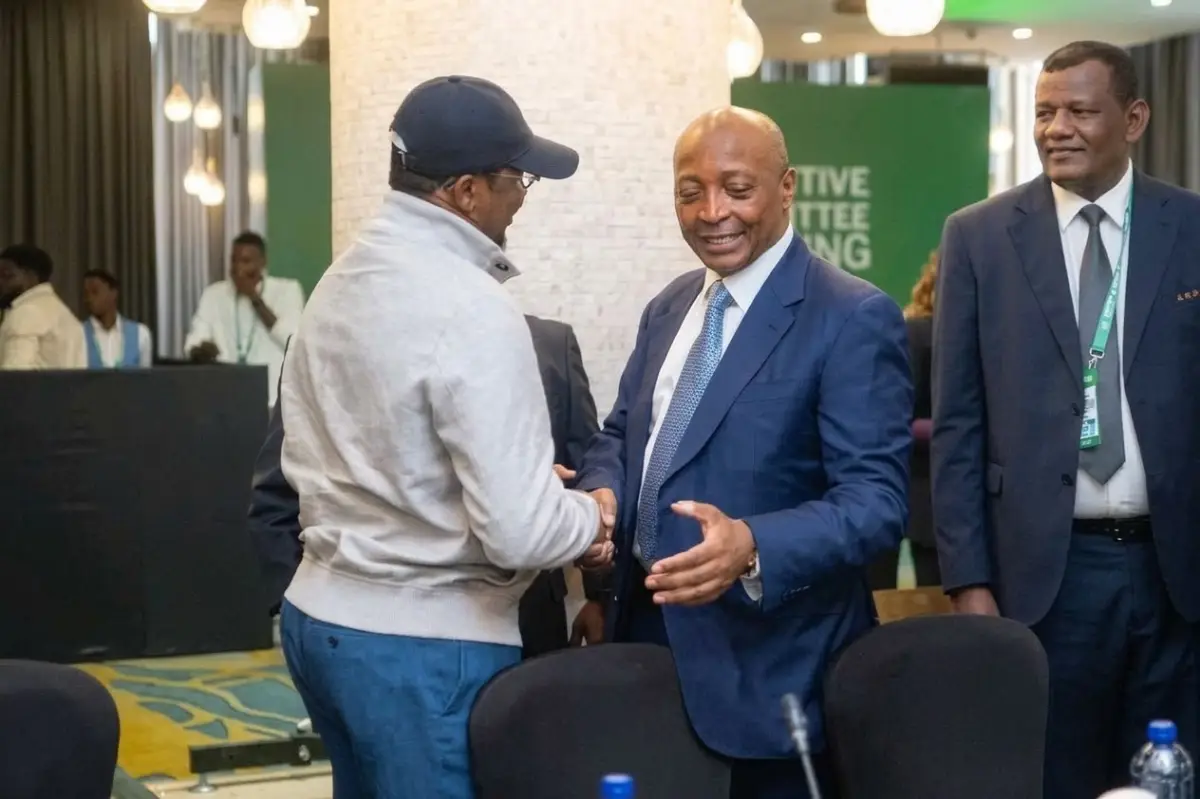
In March 2025, Samuel Eto’o took a new step in the institutions of African football when he was elected to the Executive Committee of the Confederation of African Football (CAF), as representative of the Union of Central African Football Federations (UNIFFAC). A few weeks later, he was also named chairman of the CAF Technical and Development Commission, strengthening his presence in the governing body of continental football. His arrival on the Executive Committee came as Patrice Motsepe began a second term as CAF president, after his unopposed re-election in March 2025 for a four-year period. Eto’o’s growing weight in African institutions also fuels speculation about his future at the CAF, with some media already naming him among the figures who could play an important role in the governance of African football in the longer term. At this stage, however, no candidacy by Eto’o for the CAF presidency has been officially announced.
Achievements in Cameroonian football more broadly
Beyond the national team alone, Eto’o’s presidency came with several structural reforms affecting Cameroonian football as a whole, with results judged differently depending on the stakeholders involved.
A headquarters finally completed, after fourteen years of construction
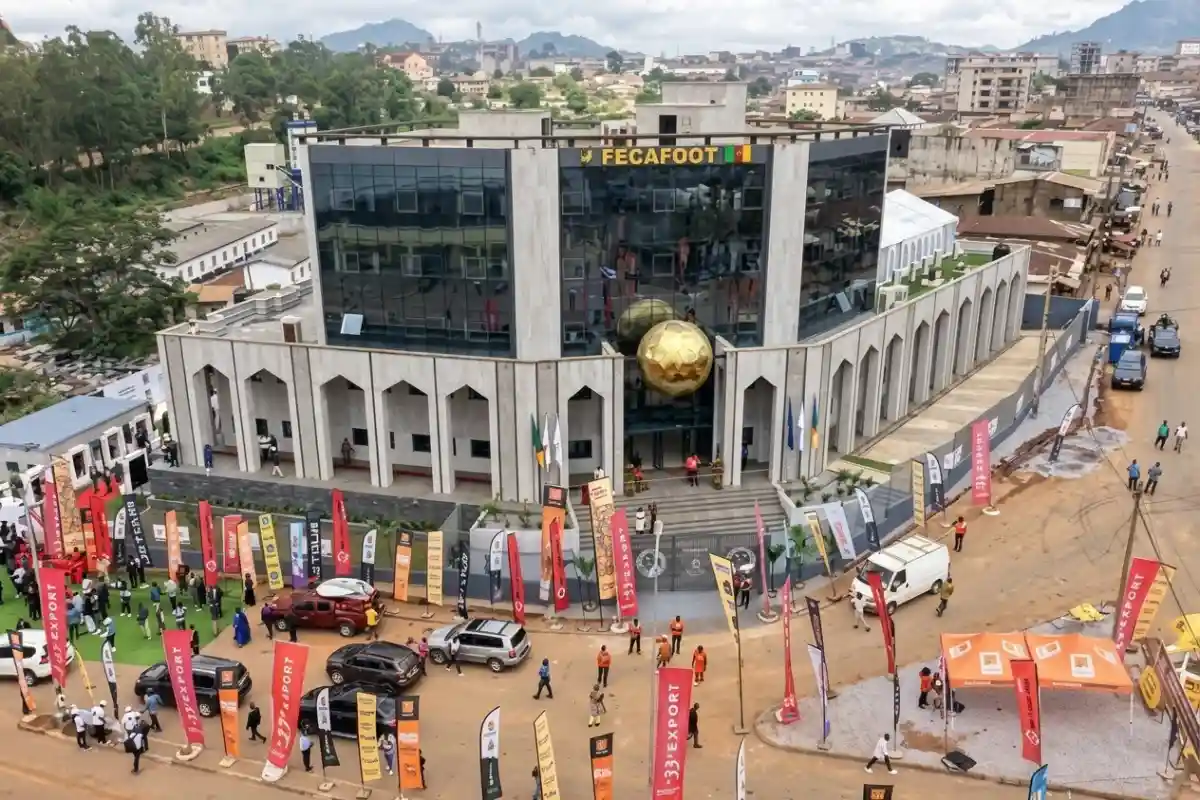
The most symbolic project remains, without a doubt, the completion of FECAFOOT’s new headquarters, inaugurated on 13 May 2026 in the Warda district of Yaoundé, in the presence of Prime Minister Joseph Dion Ngute, CAF president Patrice Motsepe and several former greats of Cameroonian and African football, including Rigobert Song, Jay-Jay Okocha and El-Hadji Diouf. The building, with offices, conference rooms, a press center and a hotel, ended a fourteen-year institutional saga: begun in 2012 under the presidency of Iya Mohamed, the works had been interrupted by his arrest in 2013, then slowed by several years of legal disputes. It should be noted that, on arriving at the end of 2021, Eto’o inherited a project that had already been relaunched, financed notably by an interest-free FIFA loan granted under its Covid-19 relief plan, and already under way; his tenure nevertheless allowed its completion and actual inauguration, an achievement praised even within FIFA’s ranks, whose president, Gianni Infantino, spoke of “a new chapter” for Cameroonian football.
A reform of the national league
The Cameroonian league also went through several reforms under Samuel Eto’o’s presidency, with a stated aim of further professionalizing the Elite One and improving its financial stability. For the 2024-2025 season, the competition was organized in particular with 16 clubs in a single group, compared with much larger and more complex formats in previous seasons. FECAFOOT also tightened the financial requirements imposed on clubs, notably by setting a minimum salary for professional players and monitoring salary payment obligations more strictly. In January 2025, the Federation also announced the release of a government subsidy intended for paying the salaries of Elite One and Elite Two players. These measures are part of a broader aim to make the league more regular, clearer and more financially viable, although payment difficulties and tensions between clubs and governing bodies continued to be reported.
An unprecedented salary policy, but a contested one
For the first time in the history of Cameroonian football, a minimum salary scale was introduced for players in the national league, set at 200,000 CFA francs in Elite One and 100,000 in Elite Two, supplemented by an allowance for women’s football. A circular signed on 4 August 2026 updated these amounts as well as the clubs’ registration fees for the 2026-2027 season. These measures were nevertheless criticized by Cameroon’s national footballers’ union (Synafoc), which denounces their unilateral nature, having been taken without consulting the stakeholders concerned. On the ground, several club presidents say they do not have the financial means to follow these salary scales, a dispute that highlights the persistent imbalance between the subsidies paid by the federation, now raised to about 48 million CFA francs per club per season according to official figures, and the reality of the clubs’ own revenue (ticketing, TV rights), often derisory in Cameroon.
Infrastructure and youth development
In terms of infrastructure, several projects were started or relaunched under Samuel Eto’o’s presidency: the stadiums of Bamenda and Kousseri, the rehabilitation of the Odza technical center (with the support of the FIFA Forward program) and of the CAF center of excellence, the construction of a hotel for the Indomitable Lions and the announcement of neighborhood stadiums in several cities across the country (Sangmélima, Ebolowa, Maroua, Ngaoundéré, Bamenda, Edéa, Kribi, among others), whose works began in several localities without the whole program being completed to date. A reform was also launched concerning youth national teams, with the requirement that players now compete in their real age category, a measure aimed at fighting age fraud, long decried in Cameroonian football, and at better structuring the pool of talent meant to feed the senior team in the long term.
A record that continues to divide
Samuel Eto’o’s record at the head of FECAFOOT remains hard to sum up in a single reading. His tenure was marked by several reforms concerning the organization of competitions, club management and the professionalization of Cameroonian football, but also by repeated conflicts with the Ministry of Sports, tensions over the management of the Indomitable Lions and challenges concerning the Federation’s governance. These various episodes continue to fuel diverging assessments of the real scope of the changes undertaken and of their ability to last over time. One point Eto’o regularly emphasizes, moreover, is his personal situation: the former international says he receives no salary as president of FECAFOOT, something he has publicly confirmed on several occasions. Re-elected in November 2025 for a new four-year term, he now has a fresh period in which to continue the reforms undertaken and to meet the many expectations surrounding the management of Cameroonian football.